Saturday, December 22, 2018

Betsy DeVos cancels $150 million of student loan debt after losing court battle

The Department of Education said it will cancel $150 million of student loan debt, impacting about 15,000 people whose schools closed.
The Obama-era borrower defense relief program – which essentially ground to a halt under Education Secretary Betsy Devos – provided a path for people to seek forgiveness for federal student loans if a shuttered school violated specific laws or misled students.
DeVos was highly critical of the program, reportedly calling it a “free money” giveaway, and sought to change and delay the program. However, she was sued, and a federal judge ruled in September the program needed to “go into effect.”
Those eligible for loan forgiveness must have been enrolled at the school when it closed and not enrolled at another Title-IV school within three years of the previous school’s closing, according to the Education Department.
PLUS loans – which parents took out on behalf of children – could also be eligible for discharge.

UNIVERSITIES TOOK $600 MILLION TIED TO MUSLIM NATIONS WHILE FORMING GRADE SCHOOL CURRICULA FOR US STUDENTS

  • A Department of Education program funds colleges to teach about the Arab world, but upcoming payments are going to colleges that have received millions of dollars from Arab countries like Qatar and Saudi Arabia, data shows.
  • One critic said that coupling the program with the foreign funding is “a back-door route to Saudi influence.”
  • Some of the universities employ faculty or have hosted guests who made anti-semitic remarks.
Universities funded by the Department of Education to help shape the way U.S. K-12 schools and colleges portray the Middle East and Israel are simultaneously bankrolled by $600 million tied to Saudi Arabia, Qatar and other Muslim-majority countries, a Daily Caller News Foundation data analysis found.
One critic called the payments “a back-door route to Saudi influence over America’s K-12 curriculum.”

Sunday, December 16, 2018

Corbett Report: History Is Written By The Winners

Episode 350 – History Is Written By The Winners

 • 12/14/2018 • 8 Comments
Who gets to write the history textbooks? Where do the history teachers learn about history? What documents are allowed into the historical record, and what documents are excluded? These are not merely academic questions, they go right to the heart of the question of history itself. Join James Corbett for today’s edition of The Corbett Report and an in-depth exploration of the formation of the historical record about World War One.
For those with limited bandwidth, CLICK HERE to download a smaller, lower file size version of this episode.
For those interested in audio quality, CLICK HERE for the highest-quality version of this episode (WARNING: very large download).


Watch this video on BitChute / DTube / YouTube or Download the mp4

Sunday, October 7, 2018

What an Audacious Hoax Reveals About Academia

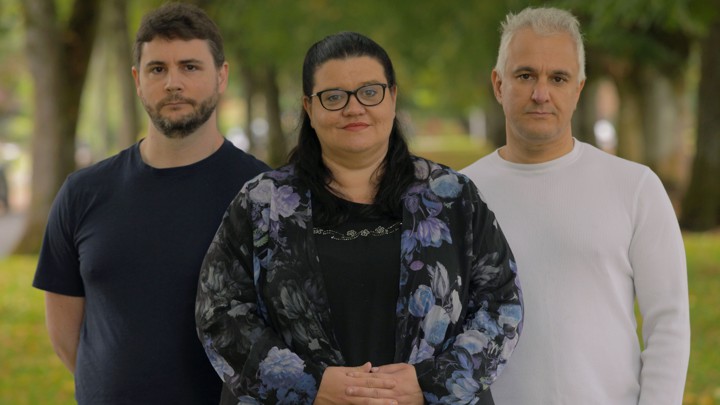
James A. Lindsay, Helen Pluckrose, and Peter Boghossian, the scholars behind the hoax

Over the past 12 months, three scholars—James Lindsay, Helen Pluckrose, and Peter Boghossian—wrote 20 fake papers using fashionable jargon to argue for ridiculous conclusions, and tried to get them placed in high-profile journals in fields including gender studies, queer studies, and fat studies. Their success rate was remarkable: By the time they took their experiment public late on Tuesday, seven of their articles had been accepted for publication by ostensibly serious peer-reviewed journals. Seven more were still going through various stages of the review process. Only six had been rejected.

https://www.theatlantic.com/ideas/archive/2018/10/new-sokal-hoax/572212/

Sunday, August 4, 2013

Hillsdale College President Larry Arnn Under Fire For Calling Minority Students 'Dark Ones'


Hillsdale College President Larry Arnn Under Fire For Calling Minority Students 'Dark Ones'


A Michigan college issued an apology after its president made racially offensive remarks Wednesday afternoon.
Hillsdale College President Larry Arnn described minority students as "dark ones" during a state legislature subcommittee hearing regarding the adoption of Common Core State Standards.
While testifying against the Common Core, which have been adopted in more than 40 states in an effort to standardize education, Arnn said he took issue with the idea of government interfering with educational institutions and went on to describe a letter he had received from the Department of Education shortly after becoming president at Hillsdale. The letter, he told the committee, said his college "violated the standards for diversity because we didn't have enough dark ones, I guess, is what they meant."
According to Michigan-focused news site MLive, lawmakers at the meeting immediately criticized Arnn for using “offensive” language, but he did not apologize. Instead, Arnn went on to say: “The State of Michigan sent a group of people down to my campus, with clipboards ... to look at the colors of people’s faces and write down what they saw. We don’t keep records of that information. What were they looking for besides dark ones?"
A Michigan Department of Education spokesperson told the Detroit Free Press thatofficials visited Hillsdale in 1998 for a routine evaluation of the school’s teacher preparation program. During that visit, they noted the ethnicity of the students and faculty members in the program.
Several hours after Arnn made his initial statements, Hillsdale College issued an official apology. “No offense was intended by the use of that term except to the offending bureaucrats," read the statement, which was published by MLive. It further said that while Arnn was sorry if offense was taken, his greater concern “is the state-endorsed racism the story illustrates."
Located in Hillsdale, Mich., the small liberal arts institution over which Arnn presides was founded in 1844. According to its website, the school "was the first American college to prohibit in its charter any discrimination based on race, religion or sex, and became an early force for the abolition of slavery.” Hillsdale does not receive state or federal subsidies and avoids “federal mandates and control,” another page on its site says.
An alum told MLive he believes Arnn’s comments were misunderstood.
“I think this was Dr. Arnn’s way to indicate that he was offended with what they were doing in taking clipboards and walking around campus to record the color of students’ skin,” James Joseph, a 2010 graduate, told the outlet. “He’s a very magnanimous man with a generous and charitable spirit, but he doesn’t stand on public piety.”

Thursday, September 8, 2011

Idiocracy: University of Michigan (known for research) regents ban research at UofM

Idiocracy: University of Michigan (known for research) regents ban research at UofM

This story seems so absurd I had to read it twice to make sure I read what I actually thought I'd read. It's true. The University ofMichigan is one of the top research schools on the planet. Graduate assistants are the lifeblood of the research program. They work hard, are intellectually curious, and end up getting a PhD for their troubles. Until now, because the regents of UofM have decided that they should throw a wrench into the research gears just to see what would happen. From The Detroit News: Give Brotherhood a (Go Blue) cheer
More evidence that elected officials too often don't act in the interest of fiscal responsibility or the people who elect them comes from the University of Michigan, where the Democratic-dominated Board of Regents voted to let graduate researchers pursue forming a union.

These are students, as University of Michigan President Mary Sue Coleman pointed out in opposing the move. They have not traditionally been considered employees; in fact, no other university in the nation has unionized student researchers.

They do receive compensation for their work on grant-funded research projects, and U-M gives them health care and free tuition. But the work they are doing is part of their studies.

Coleman worries that placing the researchers into a union would "fundamentally alter the relationship between faculty and graduate students."
Funny she had no such worries about ObamaCare fundamentally changing the patient-doctor relationship, and that between citizens and the government, but anyway. But here's the thing. It's troubling enough that this will lead to higher tuition, higher wages and more bennies to grad students. It's the hours and working conditions that will make research all but dead. As a former grad student myself, i can tell you that I essentially lived at the University. I spent at minimum of 100 hours a week on work. Not because someone told me so, but because I wanted to. It was intellectually stimulating and fun for me. I was climbing my ownmountain to put up my own flag on the summit. All my grad student colleagues did pretty much the same thing. We lived and breathed our research. If some union honcho was walking the hallways tallying our hours, we would be sent home by Wednesday for the week. It simply won't do. That research was part of my studies, and whatever time I dedicated to it was of my own choosing. A union would have destroyed that.

This is #58,882 why Democrats should not be elected to any office whatsoever. They were hired to look out for the best interestof UofM in this case. Instead they are just puppets of Big Labor and look out for unions, not UofM. Writes the News:


...The Democratic regents were elected with labor money, and that they would serve labor's interests can be expected.
The Democratic argument that the researchers are employees is particularly flimsy, given that the MichiganEmployment Relations Commission previously ruled their work as researchers is indistinguishable from their role as students, and therefore they shouldn't be considered employees.

Monday, August 8, 2011

Cornell decision to ax courses steps on academic freedom

We are Cornell professors devoted to our university and to the pursuit of knowledge. Pushing the boundaries of knowledge, although often exhilarating, can be challenging.

We now find ourselves at odds between our scholarly responsibilities and our institution's expectations. One of us has formulated a fascinating and intellectually elegant way of understanding nutrition. The other has become aware of an oversight in Albert Einstein's special theory of relativity. Both of our interpretations profoundly challenge current paradigms, with far-reaching implications. Critique and challenge is something we welcome.

We recently met each other because both of our courses were removed from the Cornell course catalog without consulting us — effectively removing our perspectives from the curriculum and from further consideration by Cornell students. We now question the way that Cornell handles the teaching of scientific matters that do not conform to the status quo.

These assaults on academic freedom have not gone unnoticed outside of Cornell, and have been reported on in the June newsletter of the American Institute for Science and Technology Education and in the documentary film "Forks over Knives."

Alarmingly, the elimination of our courses was performed without consulting us as instructors and with no explanation (except for one letter now being suppressed). We appealed the decisions only to find that the process was tightly controlled with no transparency. To this day, no reasons for the course cancelations have been given.

In one case, the decision to eliminate the course was crafted by an administrator having a personal association with an industry and companion government agency known to be unhappy with one of our professional views, as offered in the course.

In the second case, the possibility exists that the course was removed under the auspices of a dean who happens to be a geneticist because the students were taught to develop an active skepticism about the lucrative trends in genetics, such as modifying food crops using antibiotic-resistance genes and performing genetic tests for mental illness and athletic performance. Cornell University should be a "marketplace of ideas" as Justice William Brennan described the role of the American university, and not the ideas of the marketplace as it currently seems to be.

We wish to speak of the serious assault on academic freedom that these administrative actions represent. In both cases, single administrators acted in an arbitrary and capricious manner with no input from the instructor. Indeed, we question Cornell's commitment to the concept of academic freedom, a serious matter that questions fundamental issues of university credibility and integrity.

We hold dear the concept of academic freedom and believe that challenging dogma is not only a right but a responsibility when we have observations and findings to support our views. Without intellectual freedom of inquiry and expression of opinion, the core mission of a university is eviscerated and the academy ceases to exist. Without having such academies, a society decays into autocracy. In such a scenario, we can no longer claim to have universities of, by and for free thinkers.

We are both sincere about our career findings. So are a growing community of people and institutions outside of Cornell. But our researches seem to be presenting serious challenge to Cornell. While we do not know the reasons why our courses were eliminated covertly, it has not escaped our notice that the administrators who made the decisions were, intentionally or not, serving the interests of their industry counterparts.

We both are proud to be Cornellian. One of us came to the Cornell faculty 23 years ago. The other did his graduate work at Cornell, returned to Cornell as a full professor 37 years ago and was then appointed to an endowed chair. He developed a highly productive research program that was generously funded by the U.S. taxpayer via the National Institutes of Health. It is our purpose to think, to explore new vistas and to share them with students and others in a manner that is consistent with human welfare and progress. We believe that most people support this view and we can only hope that Cornell will see the error of its ways.

The concept of academic freedom is essential to the mission of any university. Students and faculty must have the right to explore issues, including those that may be inconvenient to external political groups or to authorities, without being subjected to discriminatory practices and repercussions. We are a public institution and are obligated to share our views with students and with the public according to what our scholarship may reveal. It is not our purpose, as instructors and researchers, to speak for the academy as an institution. It is our purpose to share what we believe are ideas that can create a new public narrative benefiting Cornell, ourselves and our society.

Campbell is professor emeritus of nutritional biochemistry and Wayne is associate professor of plant biology. Both work at Cornell University.